
About Flowerghosts
“In North Norfolk everything is imminent. You can see it all coming: The weather; the church spires; the birds. Even the grass whispers uninterrupted process, shifting its summer mauves into purples and spilling slow seedheads onto baked ground”
What is Flowerghosts?

Seven summers ago, I began experimenting with the plants in and around my Norfolk home. Now, I teach workshops, have written small pocketbooks and possess an archive of cloth full of fugitive colour that is unpredictably and surprisingly resilient.
I did not intend to do this. It just happened. I was writing a novel after finishing my English Literature PhD in Wales, when we moved our family from the wilds of Carmarthenshire to a small rural farming village in North Norfolk. This place was so quiet, so flat and so full of fields. There was a different frequency here and I was not synchronized. As I walked, my balance still in deep harmony with the near vertical, slate scattered slopes of Wales, I could sense the land tilting into sea. It is: sinking marginally every year, a realignment still in process since the last ice age 10,000 years ago.
I found myself full of Hiraeth for Wales, for the ancient grey stone house I had left, and the dense tropical vegetation, always impinging, that was absent in the ordered ochres of full dry fields. I knew no-one and felt so solitary beneath the empty sky, huge and blue, interrupted only by the intermittent graffiti of birds flocking and scattering. My eyes were so full, creativity was inevitable.
Gradually, readjusting my eye to empty distances, I became a different version of myself: One who was preoccupied with this new chalky land I balanced on and Flowerghosts grew here, with me and my babies in, what seemed to us, like a brave new world. It has continued to grow every year in an organic, instinctively creative way, that you can never plan for.
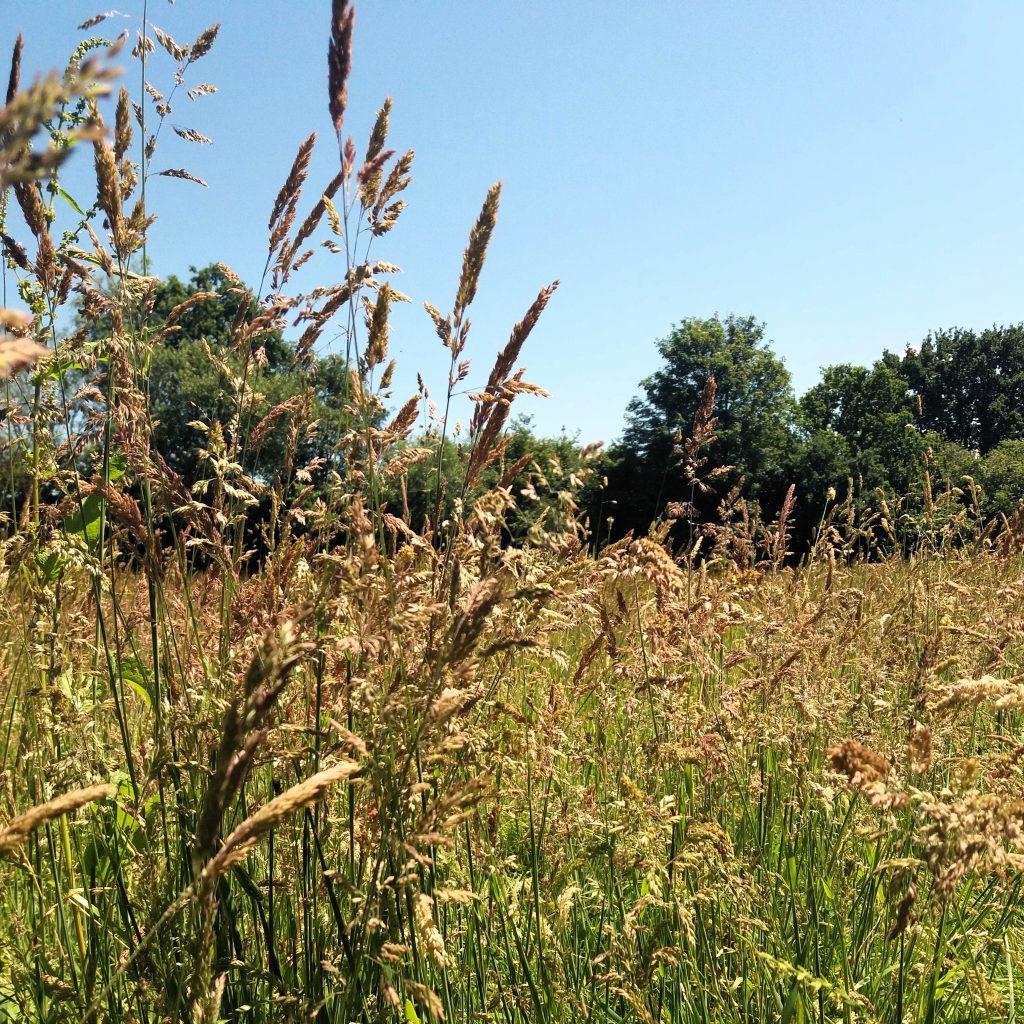
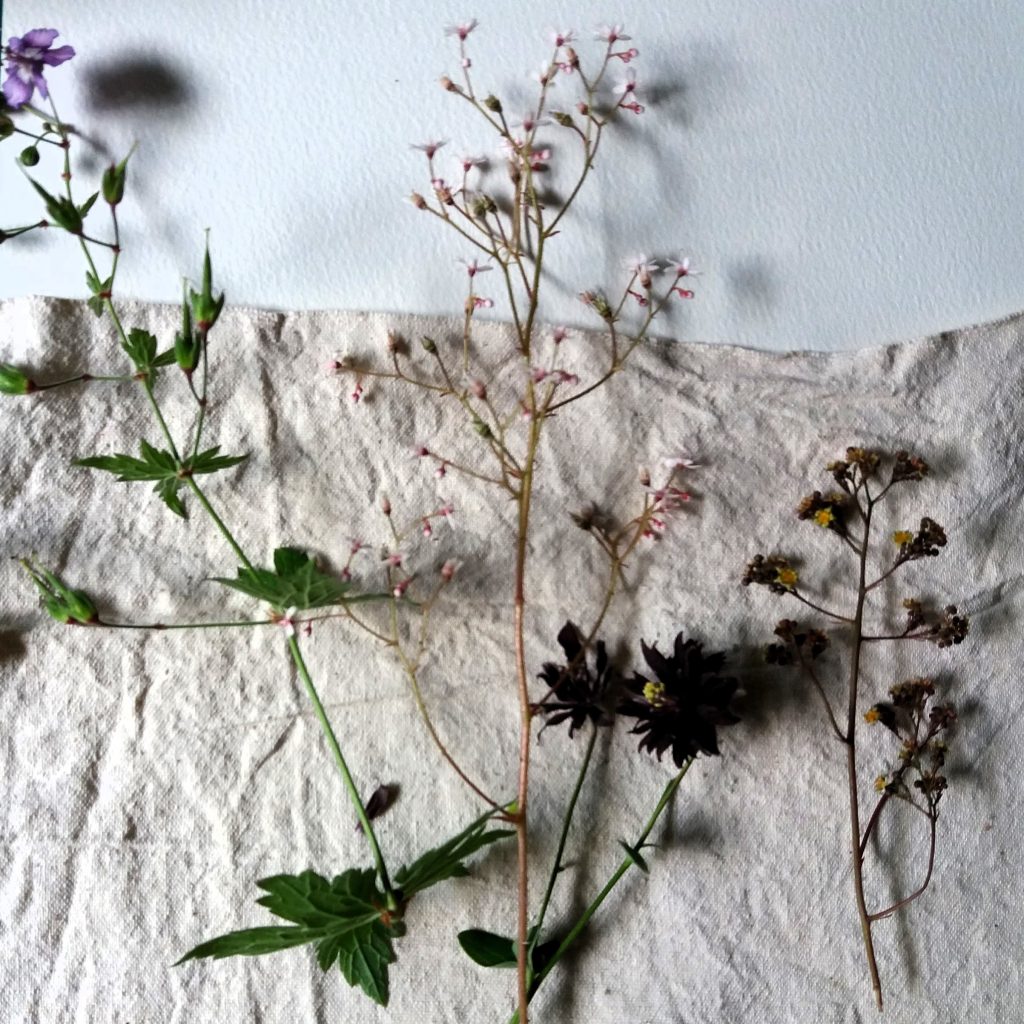
I began with wild flowers, long elegant stems that quickly filled metres of fabric with spare precise prints: Wild Sorrels, Cow parsleys, Wild Geraniums, Bedstraws and other (for me at the time) nameless plants. I was lucky. The first summers were hot and long. The earth was parched and the days stretched endlessly. Then I experimented with everything that was in the garden and began to plant more (new seeds every year), until I knew instinctively how long each print would last and how the shades would shift as each pigment lived and lapsed on the fabric. I lived and learned Flowerghosts as I went, and that will always be its heart.
Because of this story, as a brand, Flowerghosts is personal and familial. It belongs to and embraces change. It sits in the frailty and resilience of the natural world and our journey through it. It is local, organic, processual, and born from the collision of modern family life with our small frontier. The challenges of living in a rural community where technology is vital yet scarce is woven both into the development of the business and into the Ethos. It is necessarily slow, forgiving and always looking out into the distance to see what is coming next.
What is Tataki Zome?
The process is simple and ritualistic. You arrange the petals onto the surface of the pre-treated (mordanted) fabric. I tend to work one petal at a time as friction moves them as I work. Gently easing the petal into the form I want to see reflected in the print, I then cover it carefully with another piece of fabric. Feeling for the ridges and lumps with fingertips, (a little like reading the cloth with braille) you begin to hammer over them. It is delightfully and naively simple.
I use a small headed ball pein hammer, because I value a precise print. If I am hammering a pansy I want to see every detail, every nuance of shade, every imperfection and especially the black eyelashes that stretch from the centre. I rarely use a rubber mallet, and only resort to a larger hammer head if I am hammering larger leaves. They have a tougher fibre that is harder to break through. Grasses can behave in the same way especially if it has been dry. It is harder to extract a firm and consistent print if the plant is sapless.
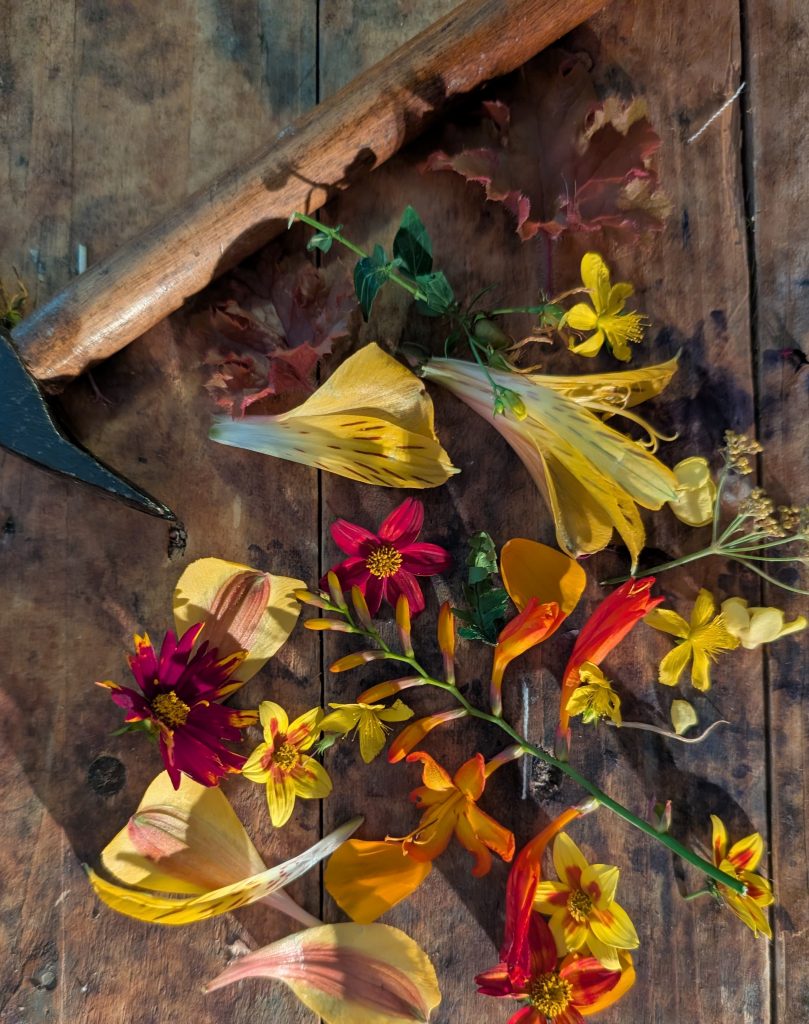
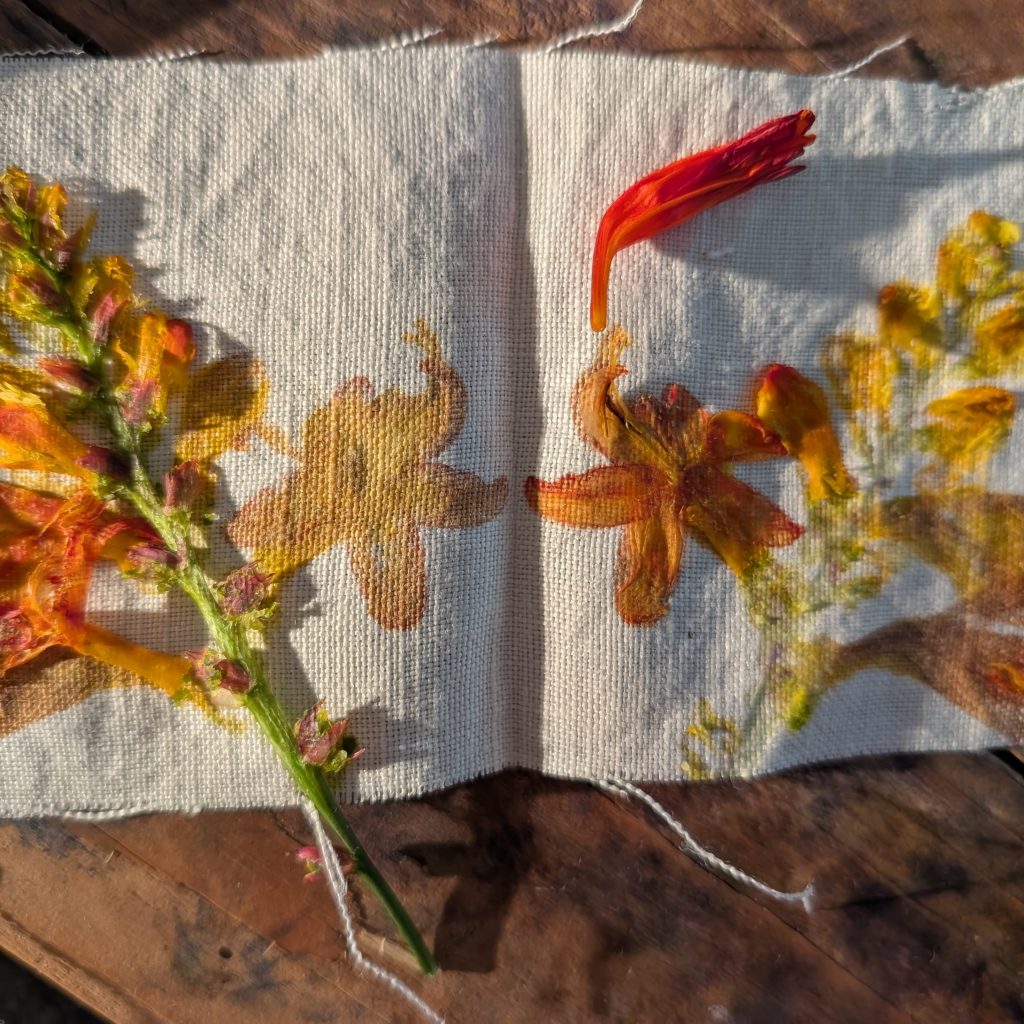
Sometimes, if I want to see what I am assembling more clearly, I will use a piece of transparent acetate rather than another cloth to cover the petals and leaves. This can result in a brighter print as none of the pigment is lost on the other surface. However, it can also produce a less defined print as another piece of cloth soaks up the excess liquid that can make prints bleed into a more abstract shape. Juxtaposing a calico with a finer muslin frequently works spectacularly well.
Shop designs:
See the full range of available designs by Flowerghosts: